Tuesday, April 7, 2009
 Type sushi
 8:12 a.m. |
  Posted by
sushi
Posted by
sushi
Oshizushi (押し寿司, lit. pressed sushi), is a pressed sushi from the Kansai Region, a favourite and specialty of Osaka. A block-shaped piece formed using a wooden mold, called an oshibako. The chef lines the bottom of the oshibako with the toppings, covers them with sushi rice, and then presses the lid of the mold down to create a compact, rectilinear block. The block is removed from the mold and then cut into bite-sized pieces.
Inarizushi
Inarizushi (稲荷寿司, stuffed
 sushi) is a pouch of fried tofu filled with usually just sushi rice. It is named after the Shinto god Inari, who is believed to have a fondness for fried tofu. The pouch is normally fashioned as deep-fried tofu (油揚げ, abura age). Regional variations include pouches made of a thin omelette (帛紗寿司, fukusa-zushi or 茶巾寿司, chakin-zushi). It should not be confused with inari maki, which is a roll filled with flavored fried tofu. A very large version, sweeter than normal and often containing bits of carrot, is popular in Hawaii, where it is called "cone sushi."
Sukeroku
Sukeroku (助六, name of a man in Edo period) is the combination set of inarizushi and makizushi, which is served as a single-portion takeout style sushi-pack. In a famous Kabuki play Sukeroku, a good-looking man Sukeroku is the lover of an Oiran courtesan named Agemaki (揚巻, lit. fry for age and roll for maki). Age and maki which form her name correspond to fried tofu namely inari and makimono, respectively. One rumour of sukeroku-zushi is that takeout style packs of inarizushi and makizushi had served at performances of Sukeroku kabuki in Edo period. Sukeroku is a cheap sushi-pack and often vegetarianChirashizushi
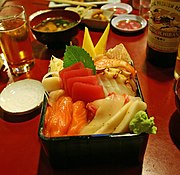
Chirashizushi (ちらし寿司, lit. scattered sushi) is a bowl of sushi rice with other ingredients mixed in (also refers to barazushi). It is commonly eaten in Japan because it is filling, fast and easy to make. Chirashizushi most often varies regionally because it is eaten annually as a part of the Doll Festival, celebrated only during March in Japan. The ingredients are often chef's choice. Edomae chirashizushi (Edo-style scattered sushi) is an uncooked ingredient that is arranged artfully on top of the sushi rice in a bowl. Gomokuzushi (Kansai-style sushi) are cooked or uncooked ingredients mixed in the body of rice in a bowl.Narezushi
Narezushi (熟れ寿司, lit. matured sushi) is a traditional form of fermented sushi. Skinned and gutted fish are stuffed with salt, placed in a wooden barrel, doused with salt again, then weighed down with a heavy tsukemonoishi (pickling stone). As days pass, water seeps out and is removed. After six months this funazushi can be eaten, remaining edible for another six months or more.Western-style sushi
The increasing popularity of sushi in North America as well as around the world has resulted in variations of sushi typically found in the West but rarely if at all in Japan. Such creations to suit the Western palate[12] were initially fueled by the invention of the California roll. A wide variety of popular rolls has evolved since. Some examples include:
Subscribe to:
Post Comments (Atom)

0 comments:
Post a Comment